

FLAT SURFACE LABELING
Flat Surface Labeling Machines
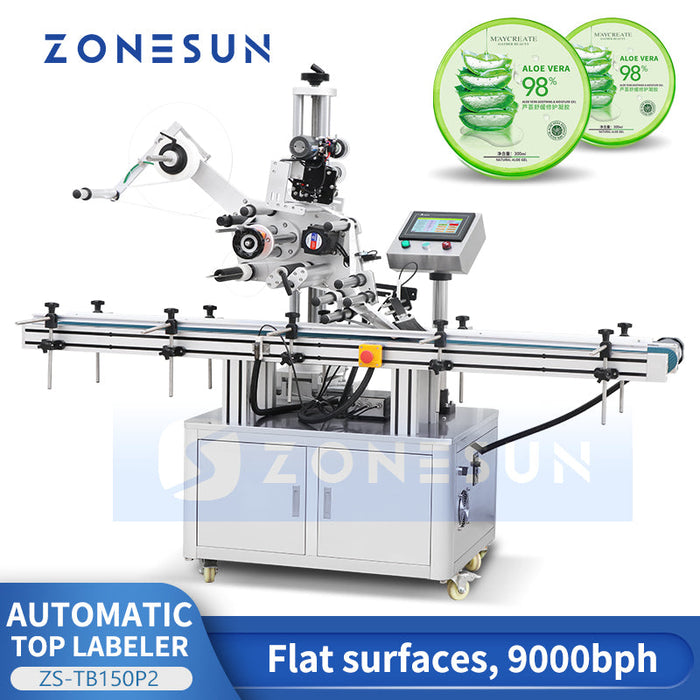
Explore flat surface labeling machines for cartons, boxes, bags, lids, pouches, cards and other products with compatible flat or near-flat surfaces. Compare top labeling, top-and-bottom labeling, paging and feeding systems, dual-head configurations and integrated coding options based on product dimensions, label specifications and required output.
Explore Flat Surface Labeling Options
Browse flat surface labeling solutions by label position, feeding method, number of label heads and coding requirements.
MACHINE CATALOG
Flat Surface Labeling Machine Catalog
Compare flat surface labelers by product dimensions, top or bottom label position, feeding method, label roll specifications, coding needs and production output.





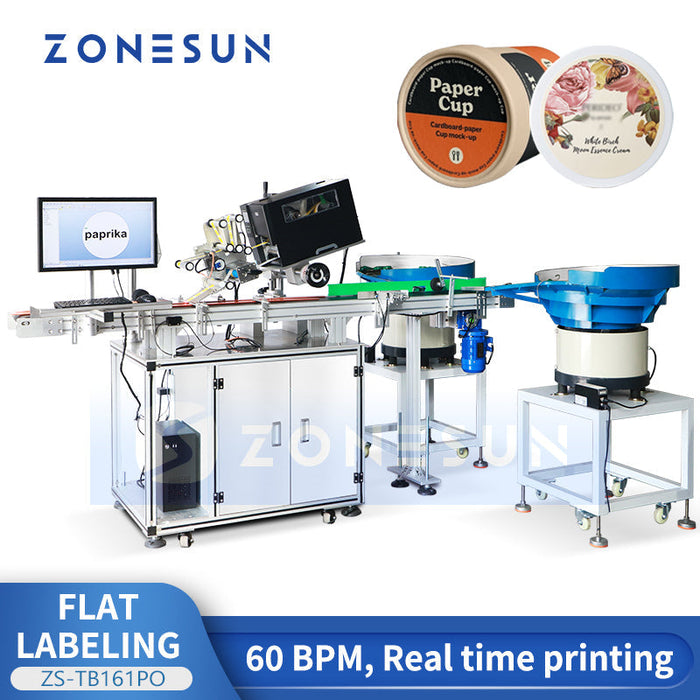
Zonesun ZS-TB650 Automatische Wiege- und Etikettiermaschine
From $15,299.00 $16,000.00


SELECTION GUIDE
How to Choose a Flat Surface Labeling Machine
Choose a flat surface labeling machine by confirming product dimensions, surface material, label dimensions and position, roll specifications, feeding method, target output and line integration. Test actual products and label rolls before ordering.
STEP 01
Confirm Your Product Dimensions and Surface
Product length, width, height, surface flatness and stability determine how the item can be conveyed and labeled consistently.
Product Length, Width and Height
- Min/Max Package Dimensions(Provide exact minimum/maximum product length, width, and thickness data.)
- Rigid vs Flexible Structures(Confirm whether items are rigid cartons, soft pouches, or flexible cards.)
- Handling & Conveying Stability(Identify lightweight, ultra-thin, or irregular items requiring custom belt guides.)
Surface Flatness and Material
- Flatness & Texture Variance(Specify recessed panels, convex/concave shapes, uneven texturing, or surface seams.)
- Material & Coating Type(Identify paperboard, rigid plastic, metallic foils, glass, or glossy film coatings.)
- Adhesion & Dynamic Static(Evaluate surface energy, moisture levels, or potential electrostatic film interferences.)
Label Position and Coverage
- Single vs Multi-Face Layouts(Define top, bottom, side, front-and-back, or multi-surface label placement zones.)
- Placement Precision Tolerances(Confirm allowable label edge margins, corner wraps, and alignment tracking tolerances.)
- Label Quantity Per Package(Determine if individual products require single or multiple labels applied concurrently.)
STEP 02
Define the Label and Placement Requirements
Label dimensions, material and roll specifications help determine applicator setup and sensor requirements.
A
Label Size and Material
Provide flat label width, length, and adhesive backing specifications. Transparent film or glossy foil labels require specialized ultrasonic tracking sensors.
B
Roll Specifications
Confirm core inside diameter, maximum outer diameter, unwinding roll direction, and web layout to ensure structural applicator compatibility.
C
Label Position and Quantity
Specify whether labels are applied via standard wipe-on, pneumatic tamp-on, or non-contact blow-on modules for fragile items.
STEP 03
Match the Machine to Your Production Line
Choose automation and handling based on output, container flow and upstream or downstream equipment.
Required output
Target containers per minute and the expected operating schedule.
Automation level
Manual placement, semi-automatic operation, automatic feeding or continuous conveyor handling.
Product changeovers
Number of container sizes and how frequently format changes occur.
Line integration
Conveyor direction, container spacing and any filling, capping or coding equipment.
FINAL STEP
Verify the Setup with Your Containers and Label Rolls
Testing representative products and label rolls helps verify feeding stability, label position, adhesion, wrinkle formation, sensor detection and practical output before confirming a machine configuration.
- Product photos, dimensions and samples
- Label dimensions and material
- Roll direction, core and outer diameter
- Label position and target output
Need help selecting a labeling machine?
Send container details, label specifications and production targets for a configuration review.
LABELING APPLICATIONS
Flat Surface Labeling Applications
Flat surface labelers are selected according to product shape, surface material, label position and feeding requirements.
Boxes, Cartons and Cards
Apply product, barcode, shipping or identification labels to compatible cartons, paper boxes, cards and flat packages.
Bags, Pouches and Lids
Label compatible flexible packs, pouches, lids and other products when the surface can be presented consistently to the applicator.
Top-and-Bottom Labeling
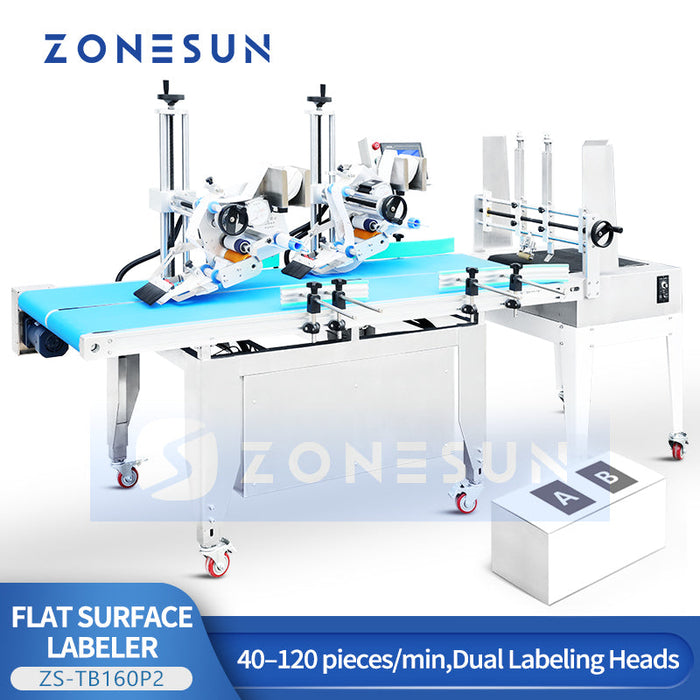
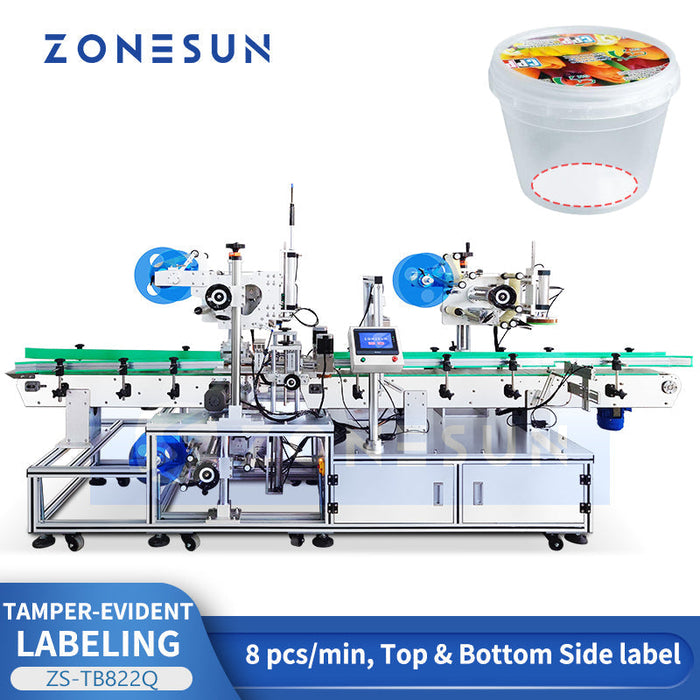
Use suitable dual-position systems for products requiring labels on both upper and lower surfaces. Confirm product thickness, transport method and label placement requirements.
Compatibility depends on product dimensions, surface condition, label stock, adhesive, feeding method and required placement. Verify the setup with actual samples before selecting equipment.
HELPFUL ANSWERS
Flat Surface Labeling Machine FAQs
Review product compatibility, label position, feeding and coding requirements before choosing a flat surface labeler.
What products can a flat surface labeling machine handle?+
Depending on the model, flat surface labelers can handle compatible boxes, cartons, bags, pouches, lids, cards and other products with accessible labeling areas. Confirm product dimensions, material and feeding method before selection.
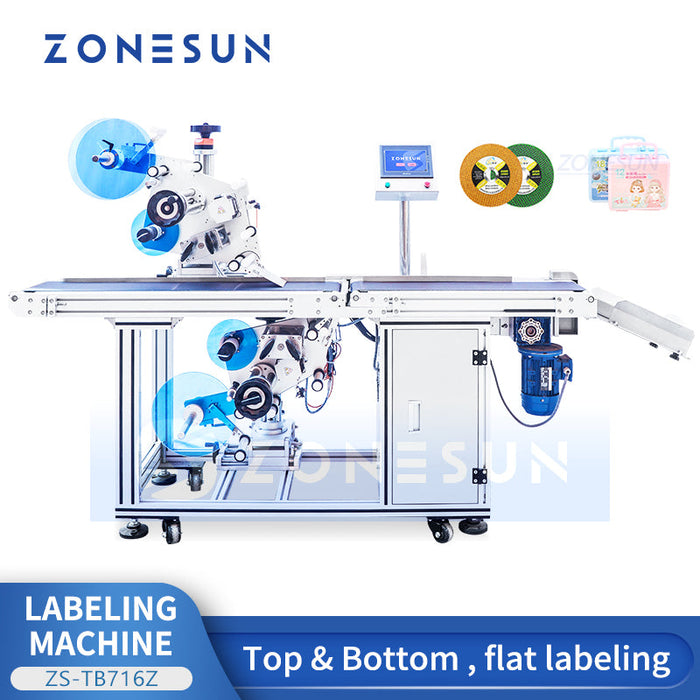
Can a machine apply labels to both the top and bottom?+
Yes. Our Top-and-Bottom Labeling Systems utilize dual synchronized labeling heads mounted above and between a split-conveyor system, allowing pristine simultaneous label application to both surfaces in a single pass.
Can the machine label products of different sizes?+
Some machines support a product size range through adjustments or change parts. Provide the smallest and largest product dimensions and expected changeover frequency to check compatibility.
Can paging or automatic feeding be integrated?+
Yes. For flat pouches, folded cartons, cards, or booklets, we can seamlessly integrate an automatic friction feeder (Paging Machine) at the infeed. This automatically separates stacks and feeds individual pieces onto the conveyor at high speeds.
Can a date coder or printer be added?+
Some configurations support compatible coding or printing during labeling. Specify the print content, print area, label material and required output so the integration can be assessed.
What information should I provide for machine selection?+
Provide product photos or samples, length, width and height, surface material, label dimensions and roll specifications, label position, target output and any feeding or coding requirements.
MACHINE SELECTION SUPPORT
Find the Right Flat Surface Labeling Configuration
Share product dimensions, surface material, label specifications, required label position, feeding method and target output to discuss suitable equipment.