Can Seaming Solutions

Can Seaming Machines

Explore can seaming machines for different container sizes, production needs, and packaging applications. Compare available models and confirm your can and lid specifications before choosing a machine.

14 products

Buying Guide

Commercial Can Seaming Machines: Complete Buying & Configuration Guide

Protect product freshness, eliminate leakage, and achieve flawless double-seam integrity with high-performance can seaming equipment. Secure airtight packaging tailored perfectly to your tin, aluminum, PET, or paperboard cans.

01

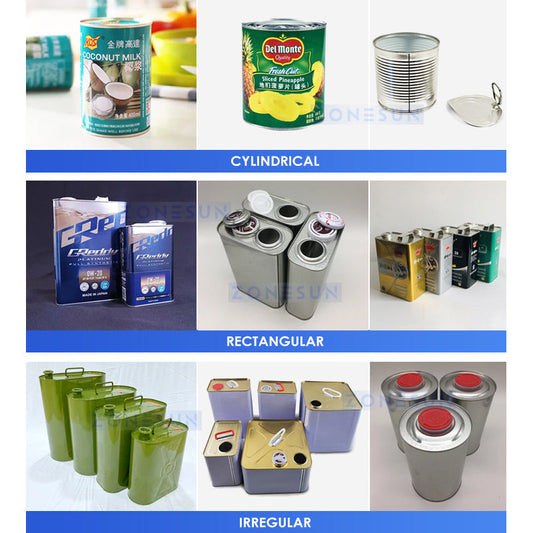
Confirm Can Size and Material(Tin, Aluminum, PET, Paperboard)

• Define your container geometry. Measure the exact can diameter, total height, lid specifications, and material composition. These precise metrics determine the ideal seaming roller profiles and chuck configurations needed for a leak-proof seal.

02

Match the Seaming Method(Rotary vs. Non-Rotary Can)

• Align the machine design with your product state. For solid goods, rotary can seaming offers high-speed efficiency. For liquids, carbonated drinks, or soups, non-rotary can seaming (where the can stands completely still while rollers rotate) is mandatory to prevent product spillage.

03

Estimate Required Output

Consider target production rate, operator workflow, and whether the machine will run independently or as part of an automated line.

04

Check Changeover & Custom Tooling Requirements

• Optimized Text: Minimize factory downtime. If your production line runs multiple can diameters or lid types, choose equipment engineered with Quick-Change Tooling systems to ensure effortless adjustments during product switchovers.

05

Evaluate Double Seam Quality & Inspection Criteria

Ensure regulatory and safety compliance. Your setup should facilitate easy access for double seam tighteness checks and teardown inspection metrics (such as body hook, cover hook, and overlap measurements) to ensure long shelf-life integrity.

06

Plan Line Integration & Upstream/Downstream Flow

Seamless factory scaling. Evaluate your infeed/outfeed layout, line height alignment, voltage standards, and synchronization compatibility with upstream automatic filling machines or downstream wash-and-label systems.

Choose the Right Level of Automation

Use your production workflow, labor availability, and target output to narrow down the machine type. Confirm actual capacity and configuration with the specific model.

Manual Can Seaming

Consider for small artisanal batches, laboratory testing, pilot R&D plants, and low-volume craft packaging.

  • Key Advantage: Compact benchtop footprint, budget-friendly investment, and highly user-friendly operation with minimal technical training required.
  • Check: Manual lid placing, mechanical lever actuation, ideal for entry-level micro-breweries or startup food labs.

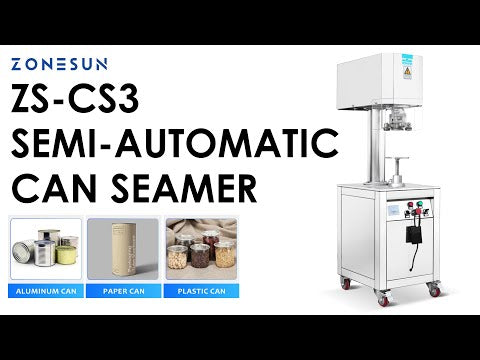
Semi-Automatic Can Seaming

Consider growing businesses looking to increase throughput while maintaining flexible product handling.

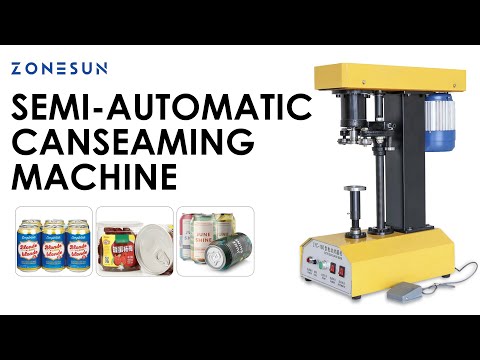
  • Key Advantage: Operators manually place the filled can and lid onto the pedestal, while the machine automatically executes the precise, motorized dual-roller double seaming cycle.
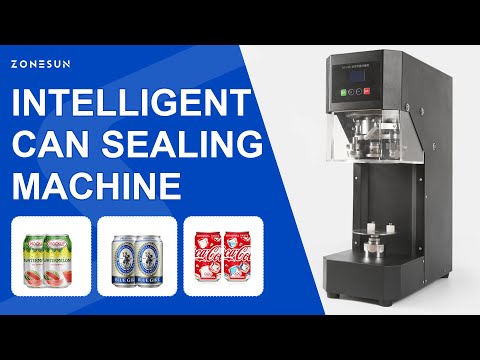
  • Check: Pneumatic or motorized lifting, consistent seam pressure, perfect for mid-volume multi-product scaling.

Automatic Can Seaming

Consider for more continuous workflows or when the seamer needs to coordinate with upstream and downstream equipment.

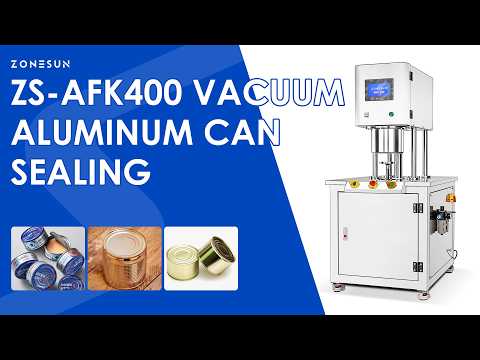
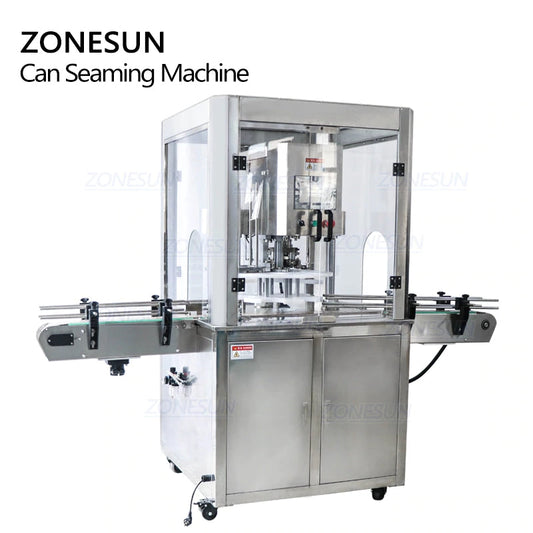
  • Key Advantage: Fully automated multi-head operations featuring automatic lid sorting/feeding, precise continuous conveyors, and optional Vacuum Sealing / Nitrogen Gas Flushing (MAP) to extend product shelf life.
  • Check: In-line sensor monitoring, jam-proof lid synchronization, ready for 24/7 continuous smart factory integration.

What to Prepare Before Requesting a Quote

Sharing these details helps the supplier assess compatibility and recommend a suitable configuration.

01

Can and lid specifications

Provide the exact can diameter, total height, rim profile, material (e.g., Aluminum, Tinplate, PET), and clear 3D drawings or high-resolution photos of both the can and lid.

02

Product and application

Describe what product you are filling (e.g., craft beer, carbonated beverages, powder, nuts, oil) and specify if you have special hygienic, anti-corrosive, or vacuum-sealing requirements.

03

Target production volume

State your expected throughput capacity (cans per minute, per hour, or per shift) to help determine if you need a single-head or multi-head seamer.

04

Installation conditions

Confirm your available production floor space, facility power supply specifications (e.g., 220V/380V, 50Hz/60Hz), and downstream conveyor connection setups.

FAQ

Can Seaming Machine FAQs

What information should I provide when choosing a can seaming machine?

To recommend the perfect machine configuration, we require your exact can dimensions (diameter and height), can/lid material, the characteristics of your filled product (liquid, gas-injected, or solid), and your target production speed per minute.

Can one machine handle multiple can sizes?

Some models support multiple sizes with appropriate adjustments or change parts. Confirm the supported range and any additional tooling required for each format.

How should I evaluate seam quality?

Seam safety is evaluated through a precise mechanical process called Double Seaming. A high-quality seamer uses a first-operation roller to interlock the can body and lid hooks, followed by a second-operation roller to flatten the seam airtight. We highly recommend using a double seam projector/gauge regularly to inspect the seam overlap, thickness, and tighteness.

Can a can seaming machine be integrated into an automated line?

Integration depends on machine configuration and line layout. Confirm conveying direction, line speed, controls, space requirements, and interfaces with other equipment.

Need Help Selecting a Machine?

Find the Right Can Seaming Solution

Share your can dimensions, lid type, target output, and application. Our team can help you identify suitable machine configurations.

Discuss Your Application