
 ZONESUN ZS-NIC4 Macchina risciacquatrice per bottiglie ad aria ionizzata, pulitore a 8 ugelli per bottiglie in PET, vetro, PP e HDPE
$9,600.00

Dall'ideazione al completamento, le soluzioni chiavi in mano di ZONESUN offrono tutto...
Explore bottle rinsing, washing, drying and sterilization equipment for glass bottles, plastic containers, jars and selected packaging applications. Compare cleaning technologies and find a suitable configuration for your production process.
ZONESUN ZS-NIC4 Macchina risciacquatrice per bottiglie ad aria ionizzata, pulitore a 8 ugelli per bottiglie in PET, vetro, PP e HDPE
 ZONESUN ZS‑WB5G Lavatrice automatica per fusti da 5 galloni, attrezzatura per la pulizia di bottiglie di acqua minerale
 ZONESUN ZS-AFC42P Automatic Rotary Perfume Filling Machine Monoblock Negative Ion Rinsing & Vacuum Crimping
 Pastorizzatore a tunnel a spruzzo continuo ZONESUN ZS-PM2 0-98℃ per bottiglie e lattine di birra e succhi
 ZONESUN ZS-DWFC12 Monoblocco automatico 3-in-1 per imbottigliamento acqua, sistema di risciacquo, riempimento e tappatura per bottiglie in PET
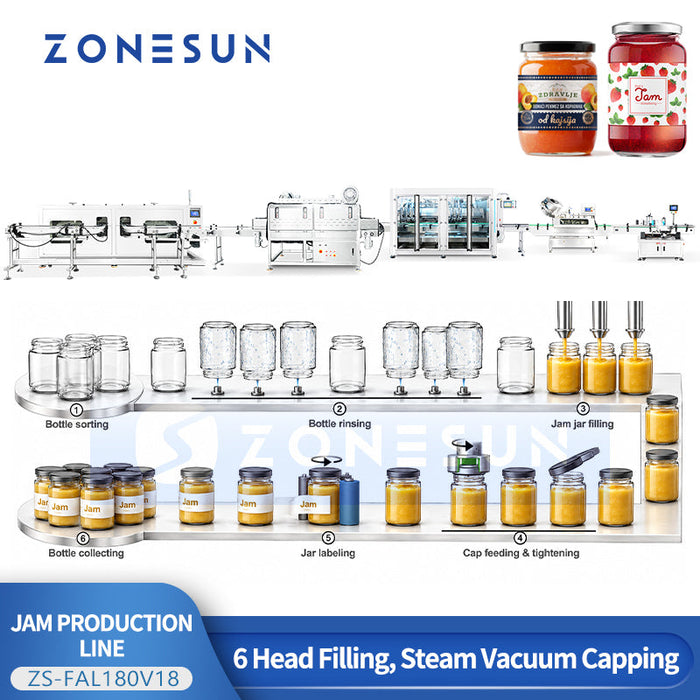 Linea di confezionamento automatica ZONESUN ZS-FAL180V18 per confettura di kaya: macchina per risciacquo, asciugatura, riempimento, tappatura ed etichettatura di barattoli di vetro
 Linea automatica di riempimento e tappatura per paste a 4 teste ZONESUN ZS-FAL180V10 con copertura antipolvere
 ZONESUN ZS-NIC1 Collettore di polvere d'aria a ioni negativi automatico, macchina per la pulizia dell'aria delle bottiglie con regolazione multi-angolo
 ZONESUN ZS-WB2S Macchina semiautomatica per la pulizia delle bottiglie a doppia testa
 Macchina automatica ZONESUN ZS-UVB1 per la sterilizzazione UV e il risciacquo ad aria di flaconi e lattine
 Tunnel di sterilizzazione UV industriale ZONESUN ZS-UVS2 per la disinfezione di cosmetici, alimenti e bevande
 ZONESUN ZS-WB12A Macchina automatica a 12 teste per il lavaggio e l'asciugatura ad aria di bottiglie in vetro e plastica
 Lavabottiglie automatica ad alta velocità ZONESUN ZS-WB15 per birra e barattoli in vetro
Lavabottiglie semiautomatica a doppia testata ZONESUN ZS-WB2S
 Lavatrice per bottiglie a ultrasuoni ZS-UWB5 per vetro e plastica 6000BPH
 ZONESUN ZS-NIC3 Soffiatrice a aria ionizzata per la pulizia di bottiglie in PET e vetro
Choose a cleaning method based on container material, contamination, process requirements and the intended downstream operation.
Use filtered or ionized air to remove loose particles from suitable container interiors before filling.
TYPE 02Wash bottles and containers with water-based processes designed for the required cleaning task.
TYPE 03Apply ultrasonic cleaning to compatible containers or components where detailed surface cleaning is required.
TYPE 04Use UV treatment as part of a suitable hygiene process for compatible products and container surfaces.
TYPE 05Apply controlled spray or thermal treatment for suitable bottles, cans and packaged products.
A container cleaning process can combine rinsing, washing, draining and drying stages according to the product and hygiene requirements.
Containers are loaded and positioned for the selected cleaning or rinsing operation.
Air, water, ultrasonic action or another suitable process is applied to remove the targeted contaminants.
Where required, residual liquid is drained and containers are dried before the next production stage.
Cleaned containers move to filling, capping, sealing or other packaging operations.
Match the cleaning technology to the container, the type of contamination and the required result. Cleaning and sterilization are different process objectives and should be evaluated separately.
Identify the container material, shape and dimensions. Consider whether you use glass, PET, other plastics or metal, together with bottle height, diameter, opening size and weight. These details determine how containers are handled and whether cleaning nozzles or fixtures can reach the required areas.
Define the type of contamination and the required treatment result. Air rinsing may remove loose dust and particles, while water washing or ultrasonic cleaning may suit other residues. If disinfection or sterilization is required, evaluate UV or other suitable treatment separately from physical cleaning.
Confirm the target output per minute or hour, drainage and drying needs, and available utilities such as water, compressed air and power. Also check conveyor direction, floor space, machine height and operating speed to ensure the cleaning equipment can integrate with the filling or packaging line.
Cleaning and sterilization equipment can be configured for different container formats and production environments.
Rinsing and washing solutions for suitable glass or plastic beverage containers before filling.
Cleaning processes for compatible perfume bottles, cosmetic jars and personal care packaging.
Suitable washing, spray treatment or thermal processing for selected food containers and packaged products.
Container cleaning and preparation for industrial products, subject to material and process compatibility.
Air rinsing uses air to dislodge and remove loose particles from compatible containers. Water washing uses a liquid cleaning process and may be more suitable for certain residues or washing requirements. The correct choice depends on the contaminant and the required cleaning result.
Some equipment can be configured for different container materials and sizes, but compatibility depends on the machine structure, fixtures, handling method and process conditions. Provide samples and dimensions for confirmation.
Ultrasonic cleaning may be suitable when the application requires more detailed cleaning of compatible containers or components. Its suitability depends on the container material, geometry, contamination type and cleaning process parameters.
No. UV treatment and physical cleaning serve different purposes. UV treatment does not remove dust, dirt or residues. If both cleaning and microbial reduction are required, the process may need separate cleaning and disinfection stages designed for the application.
That depends on the cleaning method, the product being filled and the required process conditions. Some applications require air drying or another drying stage, while others may use a different validated process sequence.
Compare the required container throughput, container dimensions, infeed and discharge arrangement, and operating speed of the filling line. The cleaning machine should be evaluated as part of the complete production process rather than by its nominal speed alone.
Provide container photos and dimensions, material, the type of contamination, the cleaning or treatment objective, required output, available utilities and details of any connected equipment. Representative samples can help assess process compatibility.
Share your container photos, dimensions, material, cleaning requirements and target output. Our team can help you evaluate a suitable cleaning or sterilization configuration.