
 Applicatore automatico di manici per bottiglie ZONESUN ZS-ABH1 per bottiglie in PET e acqua
$21,500.00

Dall'ideazione al completamento, le soluzioni chiavi in mano di ZONESUN offrono tutto...
Explore feeding, elevating, sorting and transfer equipment designed to move materials and products between processing and packaging operations. Find solutions for cap feeding, product conveying and material transfer.
Applicatore automatico di manici per bottiglie ZONESUN ZS-ABH1 per bottiglie in PET e acqua
 ZONESUN ZS-SGYG01 Macchina automatica per la chiusura di coperchi per vaschette di yogurt e gelato
 Riempitrice pneumatica per paste ZONESUN ZS-DTPT2 con serbatoio di miscelazione e pompa di alimentazione
 ZONESUN ZS-FP1 Macchina pneumatica per il riempimento di paste e liquidi viscosi, pompa automatica per il trasferimento di salse
 Alimentatore vibrante automatico per polveri e granuli ZONESUN ZS-VF50
 Macchina automatica Zonesun ZS-XG445S per l'alimentazione di tappi a pompa e spruzzatori a grilletto per flaconi
 Alimentatore automatico per tappi spray a trigger Zonesun ZS-XG446S con raddrizzatore per tubicini pescanti
 Riordinatore automatico di tappi di bottiglia ZONESUN per la linea di produzione
 Elevatore e nastro trasportatore automatico per tappi ZONESUN ZS-SLJ1 per tappatrici di bottiglie
 Elevatore automatico per tappi a vite piani Zonesun ZS‑SLJ4 per linee di tappatura
 Elevatore automatico per tappi Zonesun ZS‑SLJ5 per l'integrazione con macchine tappatrici
 Nastro trasportatore con alimentatore a frizione ad alte prestazioni per sacchetti Zonesun ZS‑FFY60
 Macchina automatica per il trasporto e il bloccaggio di flaconi tondi ZONESUN ZS-JP1
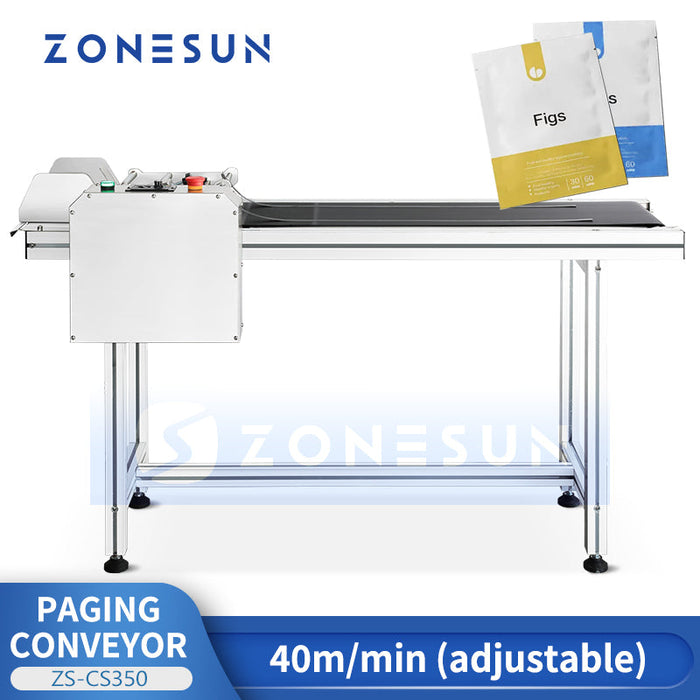 Macchina trasportatrice con alimentatore a frizione automatico ZONESUN ZS-CS350 per etichettatura e codifica
 Macchina automatica per l'alimentazione e la selezione dei tappi ZONESUN ZS-SLJ10
 Nastro trasportatore elevatore automatico per alimenti ZONESUN ZS-SLJ6 in PU
Select equipment according to the material being handled and the task required in your production process.
Feed, orient and organize bottle caps or closures before they reach the capping station.
TYPE 02Move products or bulk materials between different working heights and processing stages.
TYPE 03Deliver products or materials at a controlled rate to downstream equipment.
TYPE 04Separate and feed flat products such as bags, cards or packages into labeling and coding processes.
TYPE 05Transfer liquids, pastes, powders or granules to the next production or filling stage.
A feeding and transfer setup helps maintain a steady material flow between preparation, processing and packaging operations.
Products, caps or raw materials are loaded into a hopper, feeder, conveyor or transfer unit.
The equipment moves materials forward or raises them to the required processing height.
Where required, products are separated, oriented or delivered at a controlled feeding rate.
Materials are transferred to filling, capping, labeling, coding or other downstream equipment.
The correct equipment depends on the material, feeding method and connection requirements of your production line.
Identify whether you need to handle bottle caps, bottles, bags, powders, granules, liquids or pastes. Consider material size, shape, weight, viscosity, flowability and surface characteristics before selecting the feeding mechanism.
Different tasks require different mechanisms. Cap sorting may need an orienting feeder, bulk products may require an elevating conveyor, while flat packages may need a friction feeder. Liquid and paste transfer may require a compatible pump or feeding unit.
Estimate the required output per minute or per hour and check whether the feeding unit can keep pace with the downstream machine. The actual capacity should be confirmed using your product dimensions and operating conditions.
Check the available floor space, conveying direction, working height, discharge position and connection points. For integrated lines, confirm the inlet and outlet positions and the control signals required between machines.
For food, cosmetic or chemical applications, confirm the suitable contact materials and construction. Consider moisture, cleaning procedures, corrosion resistance and any application-specific hygiene requirements.
If you handle multiple product sizes or materials, check how feeding parts are adjusted or changed. Consider access for cleaning, routine maintenance, wear parts and the time needed for product changeover.
Feeding and transfer equipment supports different stages of automated production and packaging.
Cap feeding and sorting equipment supplies closures to automatic capping machines.
Transfer conveyors help move containers between filling, capping, labeling and packing stations.
Elevating and feeding systems move suitable food products, powders or granules between processes.
Friction feeders separate and deliver flat packages to printing, coding or labeling equipment.
A feeder controls or regulates how materials are supplied to the next process. A conveyor primarily transports products from one position to another. Some equipment combines both functions, so the best choice depends on whether controlled feeding, transportation or both are required.
Provide the cap type, dimensions, material, required feeding speed and the model of the capping machine. Cap orientation and feeding requirements vary with closure shape and design.
Configuration may be adapted to product dimensions, required conveying height, transfer direction, line layout and connection requirements. Customization should be confirmed against the actual application and equipment specifications.
Compare the required output of the downstream machine with the feeder's actual operating capacity. Product characteristics, loading consistency and machine stoppages can affect the practical feeding rate, so the complete line should be evaluated together.
Integration may be possible after checking the inlet and outlet heights, transfer direction, available space, electrical requirements and control interface of the existing machines.
Provide product or material photos, dimensions, weight or viscosity where applicable, required capacity, feeding or transfer distance, working height and the model or specifications of the connected machine.
Share your product photos, dimensions, required capacity and connected machine details. Our team can help you evaluate a suitable feeding or transfer configuration.