

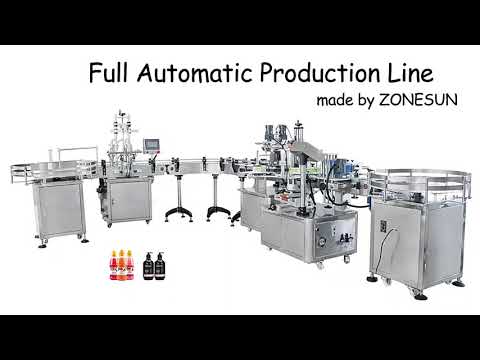

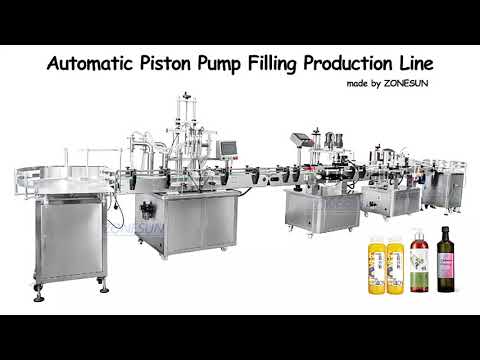

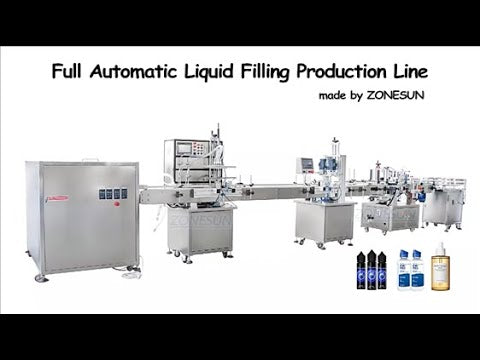

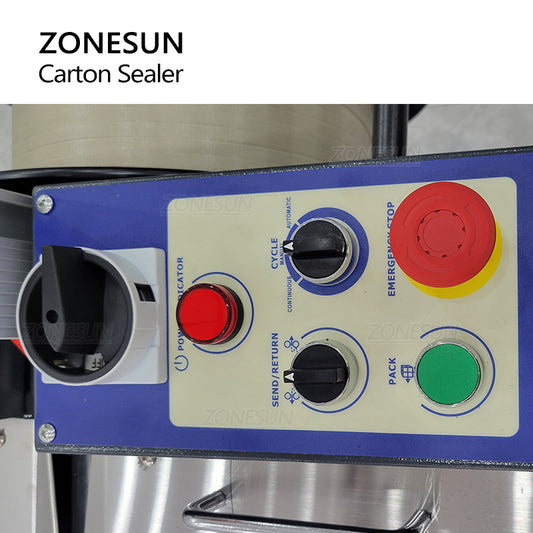


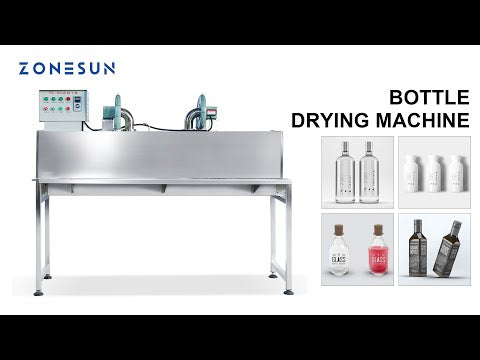

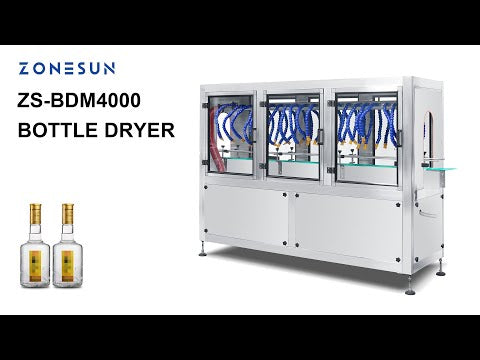






Product and Container Preparation
Prepare products and containers for consistent feeding into the packaging line.

Dall'ideazione al completamento, le soluzioni chiavi in mano di ZONESUN offrono tutto...
INTEGRATED PACKAGING SYSTEMS
Browse machines for individual packaging processes and build a configuration around your production requirements.

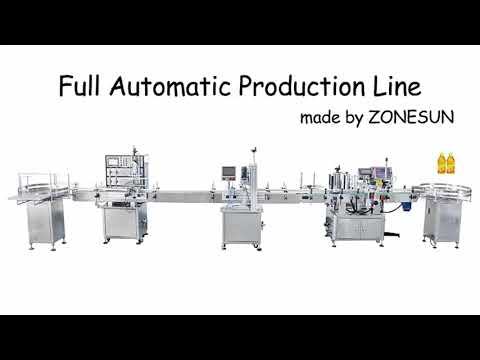

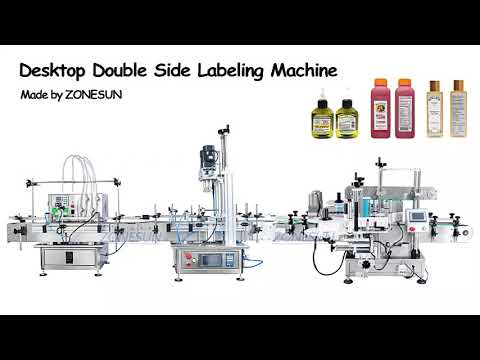
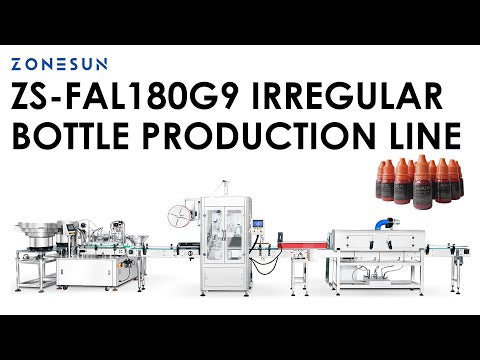
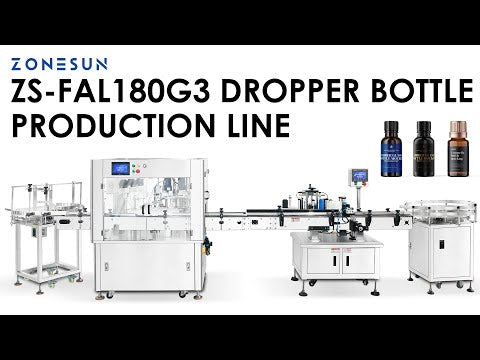
A coordinated line connects each packaging stage so containers, products and finished packs move through the process efficiently.
Prepare products and containers for consistent feeding into the packaging line.
Measure and dispense the product according to the selected filling method and target accuracy.
Apply caps, lids or seals to help protect the product and maintain package integrity.
Apply product labels and print batch, date or other required identification information.
Add cartoning, shrink wrapping or other packaging stages where required.
Move finished packs toward collection, case packing or downstream handling.
The right line configuration depends on product properties, package format, hygiene requirements and production targets.
FOOD AND BEVERAGE
Configure filling, closing, labeling and coding stages around product properties, package format and production targets.
Typical products: Sauces, drinks, oils and condiments
PERSONAL CARE
Plan equipment around liquid, cream, gel or lotion properties, container design and closure requirements.
Typical products: Lotions, shampoos, creams and serums
CHEMICAL AND INDUSTRIAL
Consider product compatibility, dosing method, container strength, sealing and labeling requirements.
Typical products: Detergents, cleaners, lubricants and chemicals
Use these planning steps to define your requirements, check equipment compatibility and prepare for a more accurate project proposal.
Identify the physical properties of your product before selecting equipment. Liquids, powders, granules and pastes may require different feeding and dosing methods.
Package dimensions and materials affect machine compatibility. Confirm the format, capacity, closure and label position before selecting equipment.
Set the target based on real production demand rather than the maximum speed of one machine. The line is limited by its slowest stage and operating conditions.
Define the complete process from product feeding to finished-pack handling. Add only the stages required by your product and sales format.
Machines must work as a coordinated system. Confirm transfer points, conveyor dimensions, speed synchronization and control interfaces before finalizing the layout.
Set quality and operating requirements before equipment specifications are finalized. Requirements may vary by product, application and target market.
Ensure the site can accommodate the equipment and allow safe movement of operators, materials and finished goods. Clarify site preparation responsibilities.
Compare proposals by total project scope rather than machine price alone. Clarify what is included, optional and required from your site team.
Review the layout and technical specifications with the supplier. Where practical, test product and packaging samples against agreed performance criteria.
CAPACITY PLANNING
Plan around the output you need to sustain in normal production—not only the maximum speed listed for an individual machine.
Define units per minute or hour, daily demand, shift length and expected changeovers. Include time for replenishment, cleaning, inspection and routine stops when estimating usable output.
Filling, capping, labeling, coding and secondary packaging must work at compatible rates. The slowest stage can constrain the whole line, so identify bottlenecks before confirming the configuration.
Different viscosities, container sizes, caps and labels may affect speed and changeover time. Validate representative products and packaging samples where practical.
Compare current demand with a realistic growth forecast. A buffer conveyor, modular machine or provision for a future station may be more practical than oversizing every machine at the start.
LAYOUT AND INTEGRATION
Good integration planning helps equipment fit the factory, supports safe operation and reduces avoidable changes during installation.
Confirm available floor area, ceiling height, door and delivery access, operator walkways, material flow and maintenance clearance. Review where containers enter and finished products leave the line.
Document electrical supply, compressed air, drainage or ventilation where applicable, and the location of utility connections. For linked machines, review conveyor height, transfer direction, speed synchronization, sensors and control interfaces.
Operators need access to adjustments, cleaning points, consumables and routine maintenance areas. Include space for format parts and safe movement around the equipment.
BEFORE YOU REQUEST A QUOTE
Share as much of the following information as possible so the equipment configuration can be reviewed against your actual production needs.
Discuss Your RequirementsAnswers to common questions about planning, integrating and specifying a packaging line.
Start with your product characteristics, package specifications, target output and required processes. These details help determine compatible machines and the line layout.
In many cases, existing equipment can be incorporated after reviewing its speed, conveyor height, transfer points, control interfaces and condition. Integration feasibility should be confirmed against the proposed line layout.
Prepare product details, package photos and dimensions, target output, required processes, factory layout and utility information. Sample testing may be needed to confirm machine compatibility and performance.
The scope depends on the project proposal. Confirm whether installation, commissioning, operator training, travel, shipping, site preparation and after-sales support are included or quoted separately.
PLAN YOUR PRODUCTION LINE
Send us your product details, packaging specifications and production targets. Our team can review your requirements and help identify a suitable equipment configuration.